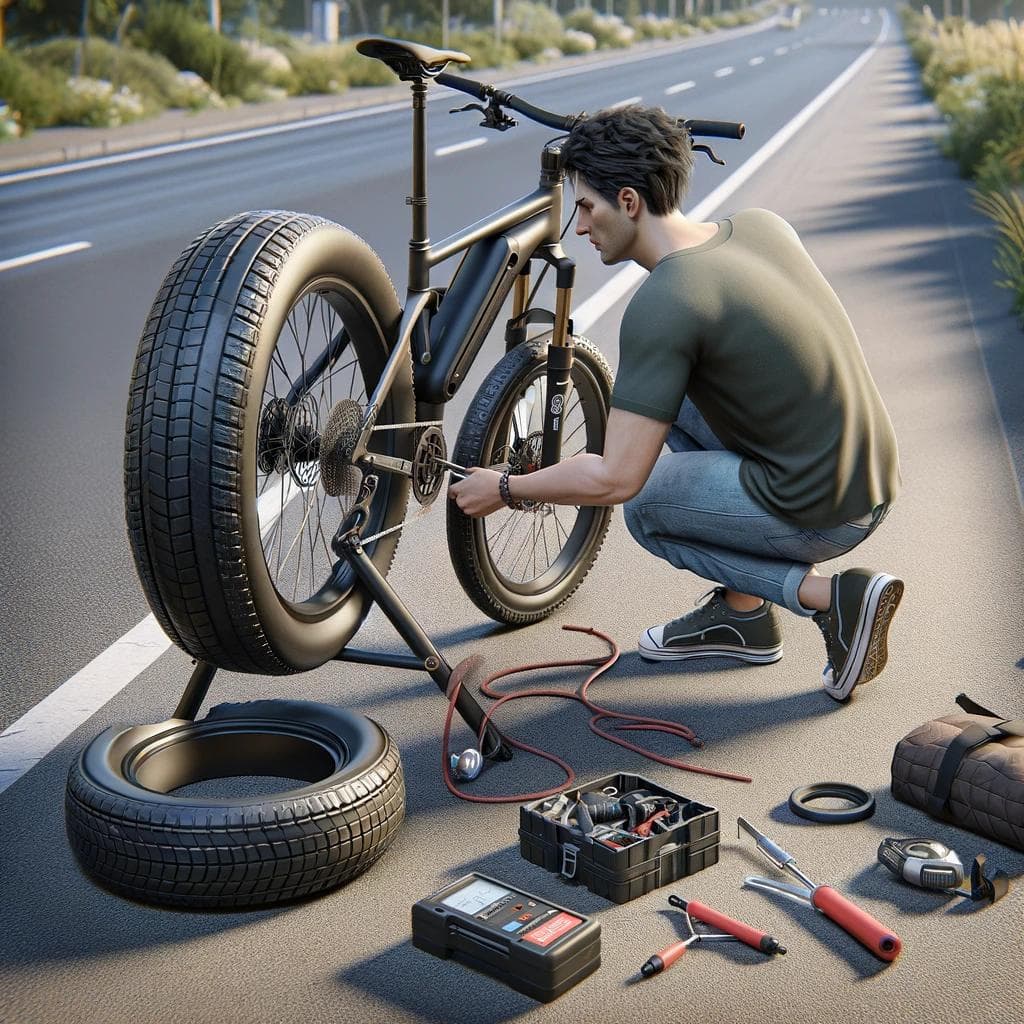
You love your current bike. The fit is perfect, the ride is familiar, and you've put thousands of kilometres on it. But lately those hills are getting harder, the headwinds more annoying, and you keep eyeing e-bikes. Good news: you don't have to buy a whole new bike. E-bike conversion kits let you add electric assist to the bike you already own for $300–$1,200 — a fraction of the cost of a new e-bike.
This guide covers how conversion kits work, which type is right for your bike, what to watch out for, and whether converting makes more sense than buying new.
How E-Bike Conversion Kits Work
A conversion kit adds three components to your existing bicycle:
- Electric motor — either built into a replacement wheel hub or mounted at the bottom bracket (cranks)
- Battery — typically mounted on the frame's down tube, rear rack, or in a frame bag
- Controller — the brain that manages power delivery, usually mounted on the handlebars with a small display
You keep your existing frame, wheels (usually), brakes, gears, saddle, and everything else. The kit bolts on with basic tools. Most installations take 2–4 hours for a mechanically inclined person.
Types of Conversion Kits
Hub Motor Kits (Most Popular)
A hub motor replaces your front or rear wheel with a new wheel that has a motor built into the hub.
Front hub motor:
- Easiest to install — doesn't interfere with your rear gears or chain
- Turns your bike into effectively an all-wheel-drive vehicle (motor on front, pedals on rear)
- Can feel "tuggy" on the front wheel, especially on loose surfaces
- Best for: flat to moderate terrain, casual riders wanting simple installation
Rear hub motor:
- More natural power delivery since the drive comes from the rear like pedalling
- Better traction on hills
- More complex installation due to rear cassette and derailleur
- Best for: hilly terrain, riders who want a more natural feel
Hub motor kit price range: $250–$800
Mid-Drive Kits
A mid-drive motor mounts at the bottom bracket (where the pedal cranks attach) and drives power through your existing chain and gears.
Advantages:
- Most natural riding feel — power goes through the drivetrain just like your legs
- Uses your gears for efficiency: low gear for climbing, high gear for speed
- Better weight distribution (centred and low)
- Superior hill climbing performance
Disadvantages:
- More complex installation — requires removing the bottom bracket
- Accelerated chain and cassette wear due to motor torque
- Higher cost
- Not compatible with all frame types
Mid-drive kit price range: $500–$1,200
The most popular mid-drive kit brand is Bafang, whose BBS02 (750W) and BBSHD (1000W) motors have a massive community of users and readily available parts. For a deeper comparison, read our mid-drive vs. hub motor breakdown.
Friction Drive Kits
A small motor presses a roller against the tyre to drive the wheel. These are the simplest and cheapest option but are noisy, less efficient, and wear out tyres faster. Generally not recommended unless you want the absolute simplest, lightest setup.
Price range: $150–$400
Choosing the Right Kit for Your Bike
Check Frame Compatibility
Not every bike is a good conversion candidate:
- Steel and aluminium frames work well. They're strong enough for motor torque and have standard mounting points
- Carbon fibre frames are risky — the added stress from motor torque and battery weight can damage carbon. Most kit manufacturers advise against carbon conversions
- Frame dropouts must match the motor axle width. Most hub motors use standard 100mm (front) or 135mm (rear) spacing
- Bottom bracket shell must be compatible with mid-drive kits. Most BSA 68–73mm shells work with Bafang motors
Check Brake Compatibility
This is a safety-critical consideration:
- Disc brakes are strongly recommended. E-bikes are heavier and faster — you need reliable stopping power
- Rim brakes can work but may not provide adequate stopping force, especially in wet conditions or on descents
- If your bike has rim brakes, budget $100–$200 to upgrade to mechanical disc brakes as part of the conversion
Battery Sizing
| Battery Size | Typical Range | Weight | Best For |
|---|---|---|---|
| 36V 10Ah (360Wh) | 30–50 km | 2.5 kg | Short commutes, flat terrain |
| 48V 13Ah (624Wh) | 50–80 km | 3.5 kg | Most riders, moderate hills |
| 48V 17.5Ah (840Wh) | 70–110 km | 4.5 kg | Long range, hilly terrain |
| 52V 20Ah (1040Wh) | 90–140 km | 5.5 kg | Maximum range, heavy riders |
Bigger batteries cost more and add weight. For most commuters, a 48V 13Ah battery hits the sweet spot.
Step-by-Step: What a Typical Hub Motor Installation Looks Like
- Remove the existing wheel (front or rear depending on kit)
- Install the motor wheel in the dropouts and secure the axle nuts
- Mount the battery on the down tube using the supplied bracket, or on a rear rack
- Route the wiring from motor to controller to battery, using zip ties to keep cables tidy
- Install the throttle and/or pedal assist sensor on the handlebars and bottom bracket
- Mount the display on the handlebars
- Connect all cables — most kits use waterproof connectors that only fit one way
- Test on a stand before riding: lift the drive wheel off the ground, power on, and verify the motor spins correctly
- Test ride in a car park at low speed before hitting the road
Conversion Kit vs. Buying a New E-Bike
| Factor | Conversion Kit | New E-Bike |
|---|---|---|
| Cost | $300–$1,200 + your existing bike | $1,500–$5,000+ |
| Warranty | Motor/battery only (1–2 years) | Full bike warranty (2+ years) |
| Integration | External wiring, bolt-on battery | Clean, integrated design |
| Weight | Adds 5–9 kg to your bike | Purpose-built, often lighter for equivalent power |
| Fit & feel | You keep the bike you love | Need to find a new bike that fits |
| Maintenance | You handle everything | Dealer support available |
| Resale value | Lower — buyers prefer factory e-bikes | Higher |
Convert when: You love your current bike, have a limited budget, enjoy DIY projects, or have a high-end frame that would be expensive to replace.
Buy new when: You want a warranty, integrated design, dealer support, or don't enjoy mechanical work.
Legal Considerations
Converted e-bikes must comply with the same regulations as factory e-bikes (see our guide to e-bike speed types and legal considerations):
- Australia: 250W continuous, pedal-assist only, 25 km/h max assisted speed
- USA: Class 1 (pedal-assist, 20 mph), Class 2 (throttle, 20 mph), or Class 3 (pedal-assist, 28 mph)
- EU/UK: 250W, pedal-assist only, 25 km/h
Many conversion kits exceed these limits out of the box (especially 750W and 1000W motors). You may need to program the controller to limit speed for road-legal use. Riding an overpowered e-bike on public roads or bike paths can result in fines and insurance complications.
Common Mistakes to Avoid
- Skipping the brake upgrade: If your bike has weak rim brakes, upgrade to discs before adding a motor. This is non-negotiable for safety
- Buying the cheapest battery: Low-quality lithium cells can be a fire hazard. Buy from reputable brands (Samsung, LG, Panasonic cells) and avoid no-name batteries
- Ignoring weight distribution: A heavy rear hub motor + rear-mounted battery makes the bike tail-heavy. Consider a front hub motor with a frame-mounted battery for better balance
- Not reinforcing spokes: Hub motors put extra stress on spokes. Consider having a bike shop re-tension or upgrade your spokes after installation
- Forgetting tyre upgrade: Your existing tyres may not handle the extra speed and weight. Puncture-resistant, wider tyres improve safety and comfort. Read our tyre replacement guide for details
Recommended Kits by Budget
Budget ($250–$500): Front Hub Kit
A 36V front hub motor with a 10Ah battery. Sufficient for flat commutes under 20 km. Brands to consider: Ebikeling, Voilamart.
Mid-Range ($500–$800): Rear Hub Kit
A 48V rear hub motor with a 13Ah battery. Good hill climbing, 50+ km range. Brands: Bafang, L-faster.
Premium ($800–$1,200): Mid-Drive Kit
Bafang BBS02 or BBSHD with a quality 48V battery. The closest you'll get to a factory e-bike feel. Excellent for hills and long rides.
Key Takeaways
- Conversion kits let you electrify your existing bike for $300–$1,200
- Hub motor kits are easiest to install; mid-drive kits offer the best ride quality
- Always upgrade brakes to disc brakes if your bike doesn't have them
- Buy batteries with name-brand cells (Samsung, LG, Panasonic) for safety
- Check local e-bike regulations — many kits exceed legal power limits by default
- Converting makes most sense if you love your current bike and enjoy DIY projects