Summer riding is glorious — long days, dry roads, and golden light. But extreme heat creates real problems for both your e-bike and your body. Lithium-ion batteries degrade faster in high temperatures, motors can overheat on sustained climbs, and heat exhaustion can sneak up on riders who aren't prepared.
If you live somewhere that regularly hits 35°C+ (95°F+), or you're planning a summer riding trip, this guide covers how to keep your e-bike healthy and yourself safe in the heat.
How Heat Affects Your E-Bike Battery
Your e-bike battery is the most heat-sensitive component. Here's what happens:
Short-Term Effects
- Reduced range: Counterintuitively, a hot battery may initially seem to perform well (lithium-ion chemistry is slightly more efficient in warmth), but sustained heat above 35°C causes the battery management system (BMS) to throttle output to protect the cells
- Thermal shutdown: If the battery temperature exceeds the BMS threshold (typically 45–60°C internally), the system will shut down the motor entirely. This is a safety feature, not a malfunction
- Slower charging: Most BMS systems slow the charge rate when the battery is hot. Charging a hot battery takes longer and is less efficient
Long-Term Effects (Permanent Damage)
- Accelerated capacity loss: Lithium-ion cells degrade faster when stored or operated at high temperatures. A battery regularly exposed to 40°C+ will lose capacity 2–3x faster than one kept at 20–25°C
- Reduced cycle life: Heat accelerates the chemical reactions that cause cell aging. A battery rated for 800 charge cycles at 20°C might only last 400–500 cycles if frequently exposed to extreme heat
- Swelling risk: In extreme cases, prolonged heat exposure can cause lithium-ion cells to swell, which is a precursor to thermal runaway (fire). This is rare with quality batteries from reputable brands but is a real risk with cheap, unbranded batteries
The Numbers
| Storage/Operating Temperature | Annual Capacity Loss |
|---|---|
| 20°C (68°F) | 2–4% per year |
| 30°C (86°F) | 4–8% per year |
| 40°C (104°F) | 10–20% per year |
| 50°C (122°F) | 20–40% per year |
These numbers apply to storage. Operating the battery (discharging while riding) generates additional internal heat on top of ambient temperature.
Protecting Your E-Bike Battery in Heat
Storage
- Never leave your e-bike in direct sunlight for extended periods. A black battery housing in direct sun can reach 60°C+ even when the ambient temperature is only 35°C
- Remove the battery and bring it indoors when you park the bike outside. Store it in a cool, shaded spot (ideal: 15–25°C). For more storage advice, see our outdoor storage and battery care guide
- Never store in a hot car. The interior of a parked car in summer can reach 60–80°C. This is the single fastest way to destroy a lithium-ion battery
- Don't store at full charge in heat: If you won't ride for several days during a heat wave, store the battery at 40–60% charge. A fully charged battery degrades faster at high temperatures
Charging
- Let the battery cool before charging. After a ride in 35°C+ weather, wait at least 30 minutes before plugging in. Charging a hot battery accelerates degradation
- Charge in a cool location: Indoors, in shade, away from windows that get direct sunlight
- Charge overnight when temperatures are cooler, rather than immediately after an afternoon ride
- Never charge an e-bike battery in a hot garage where temperatures may exceed 35°C
While Riding
- Use lower assist levels when possible. Higher assist means higher current draw, which generates more internal heat in the battery
- Take breaks in shade: A 10-minute break in shade lets the battery cool slightly
- Monitor the battery temperature if your display shows it. Some Bosch and Shimano systems display battery temperature. If it exceeds 40°C, reduce assist level. For Bosch-specific tips, see our Bosch battery life guide
- Avoid sustained high-power climbs: Long climbs at turbo assist in 40°C heat push the battery and motor to their thermal limits. Use a lower assist level and take climbing breaks
How Heat Affects the Motor
E-bike motors (both hub and mid-drive) generate heat during operation. In extreme ambient heat, they can overheat:
- Reduced power: Most motors reduce output as they approach thermal limits. You may notice the assist feeling weaker on a hot day
- Thermal cutoff: Like the battery, the motor controller has a thermal protection circuit. If the motor temperature exceeds safe limits, it will temporarily cut power
- This is most common during: Long, steep climbs in high assist mode on hot days — the worst-case scenario for motor temperature
Prevention:
- Use moderate assist levels on climbs instead of turbo
- If the motor cuts out due to heat, stop and wait 5–10 minutes for it to cool before continuing
- Mid-drive motors generally manage heat better than hub motors because the airflow from the spinning wheel helps cool hub motors (but mid-drives benefit from gear reduction efficiency)
Protecting Yourself: Rider Safety in Extreme Heat
Heat is more dangerous to riders than to bikes. Heat exhaustion and heat stroke are genuine medical emergencies.
Hydration
- Drink before you're thirsty: By the time you feel thirsty, you're already mildly dehydrated
- 0.5–1 litre per hour in hot conditions, more if you're sweating heavily
- Electrolytes matter: Water alone doesn't replace the sodium, potassium, and magnesium you lose through sweat. Use electrolyte tablets or sports drinks
- Carry more water than you think you need: Two large bottle cages (750ml each) or a hydration pack
- Plan your route around water refill points: Parks with drinking fountains, shops, cafes
Timing Your Ride
- Ride early or late: The safest windows are before 10 AM and after 4 PM in summer. Midday rides in 35°C+ heat should be avoided unless the ride is short and shaded
- Check the UV index: Above 8 ("very high"), sunburn can occur in under 15 minutes. Use sunscreen and wear sun-protective clothing
- Monitor heat advisories: On extreme heat days (40°C+), consider skipping the ride entirely. No ride is worth heat stroke
Clothing
- Light colours: White, light grey, and pastel colours reflect sunlight. Dark colours absorb heat
- Breathable, moisture-wicking fabrics: Cycling jerseys are designed for this. Avoid cotton, which holds sweat and feels heavy
- Sun sleeves: Lightweight UPF 50+ arm sleeves protect from sun without overheating. They feel cooler than bare skin because they wick sweat and block radiant heat
- Ventilated helmet: Ensure your helmet has adequate vents. Heat escapes primarily through the head
- Sunglasses: Protect your eyes and reduce squinting fatigue
Recognising Heat Illness
Heat exhaustion (stop riding immediately, move to shade, hydrate):
- Heavy sweating
- Cold, clammy skin
- Nausea or vomiting
- Dizziness or light-headedness
- Muscle cramps
- Rapid, weak pulse
Heat stroke (medical emergency — call emergency services immediately):
- Body temperature above 40°C (104°F)
- Hot, dry skin (sweating may have stopped)
- Confusion or altered consciousness
- Rapid, strong pulse
- Loss of consciousness
If you or a riding companion shows signs of heat stroke, call emergency services, move to shade, and cool the person with water or ice immediately.
Hot Weather Maintenance Checklist
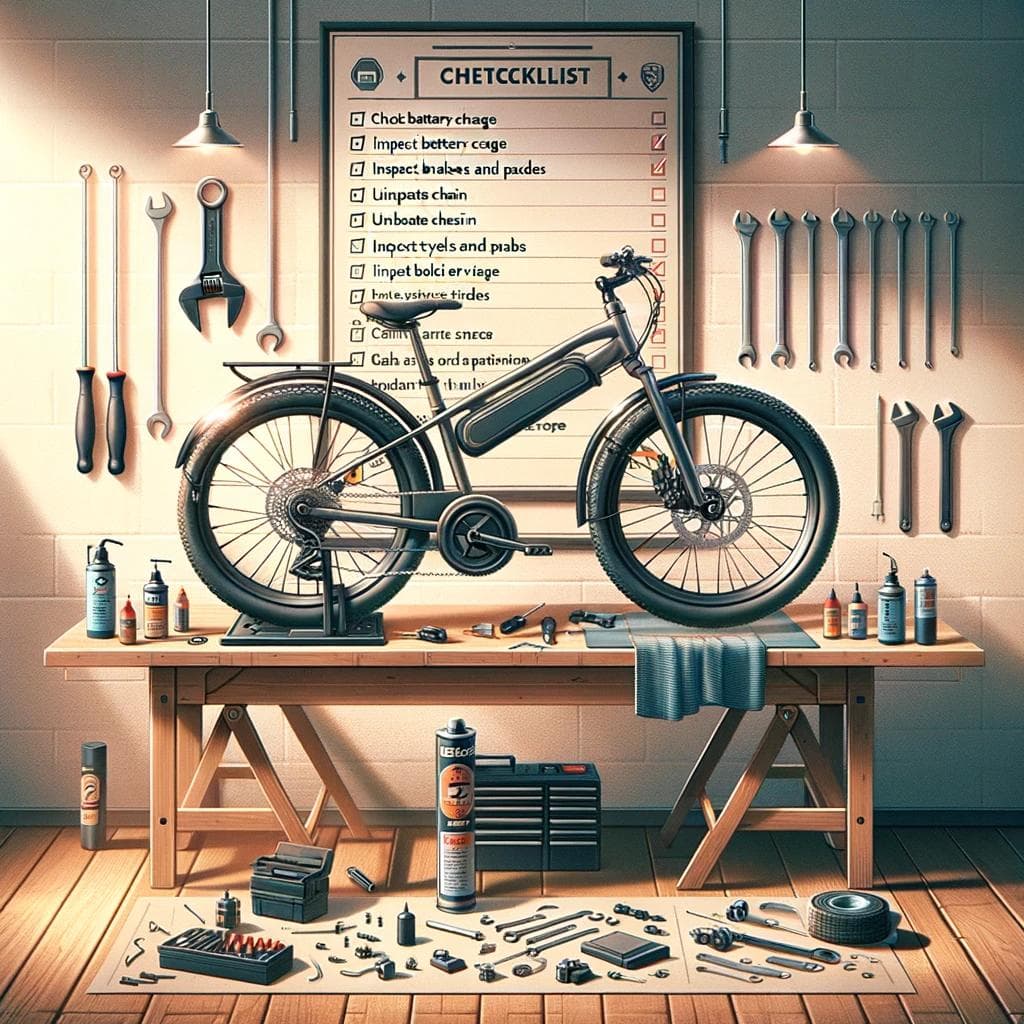
Heat accelerates wear on several bike components beyond the battery:
- Tyre pressure increases: Air expands in heat. Tyres inflated to maximum pressure in the morning may exceed safe limits by afternoon. Inflate to 10% below maximum in hot weather
- Chain lubricant dries faster: Apply chain lube more frequently in summer. Dry lube evaporates faster in heat. Our beginner maintenance guide covers chain care basics
- Brake fluid can overheat: On long descents in heat (especially if you ride heavy), hydraulic brake fluid can boil, causing brake fade. Use quality DOT 5.1 or mineral oil and bleed brakes annually
- Display screens: Prolonged direct sunlight can damage LCD screens. Park in shade when possible
- Rubber components: Grips, handlebar tape, and saddle covers degrade faster in UV and heat. Check for hardening or cracking
Key Takeaways
- Extreme heat permanently degrades lithium-ion batteries. Never store your battery in a hot car or in direct sunlight
- Remove the battery and store it indoors (15–25°C) when parking the bike outside in summer
- Let the battery cool for 30 minutes before charging after a hot ride
- Use moderate assist levels in heat to reduce battery and motor thermal stress
- Ride before 10 AM or after 4 PM on extreme heat days. Carry 1.5+ litres of water with electrolytes
- Know the signs of heat exhaustion and heat stroke. Stop riding immediately if symptoms appear
- Check tyre pressure in hot weather — heat causes air expansion and potential over-inflation